Spathiphyllum wallisii (Peace Lily) Care Guide
The Peace Lily (Spathiphyllum wallisii) is loved for its elegant white spathes and lush, dark green foliage. Native to the tropical rainforests of Central America, it is highly adaptable to normal home environments and looks really good with modern interior design.
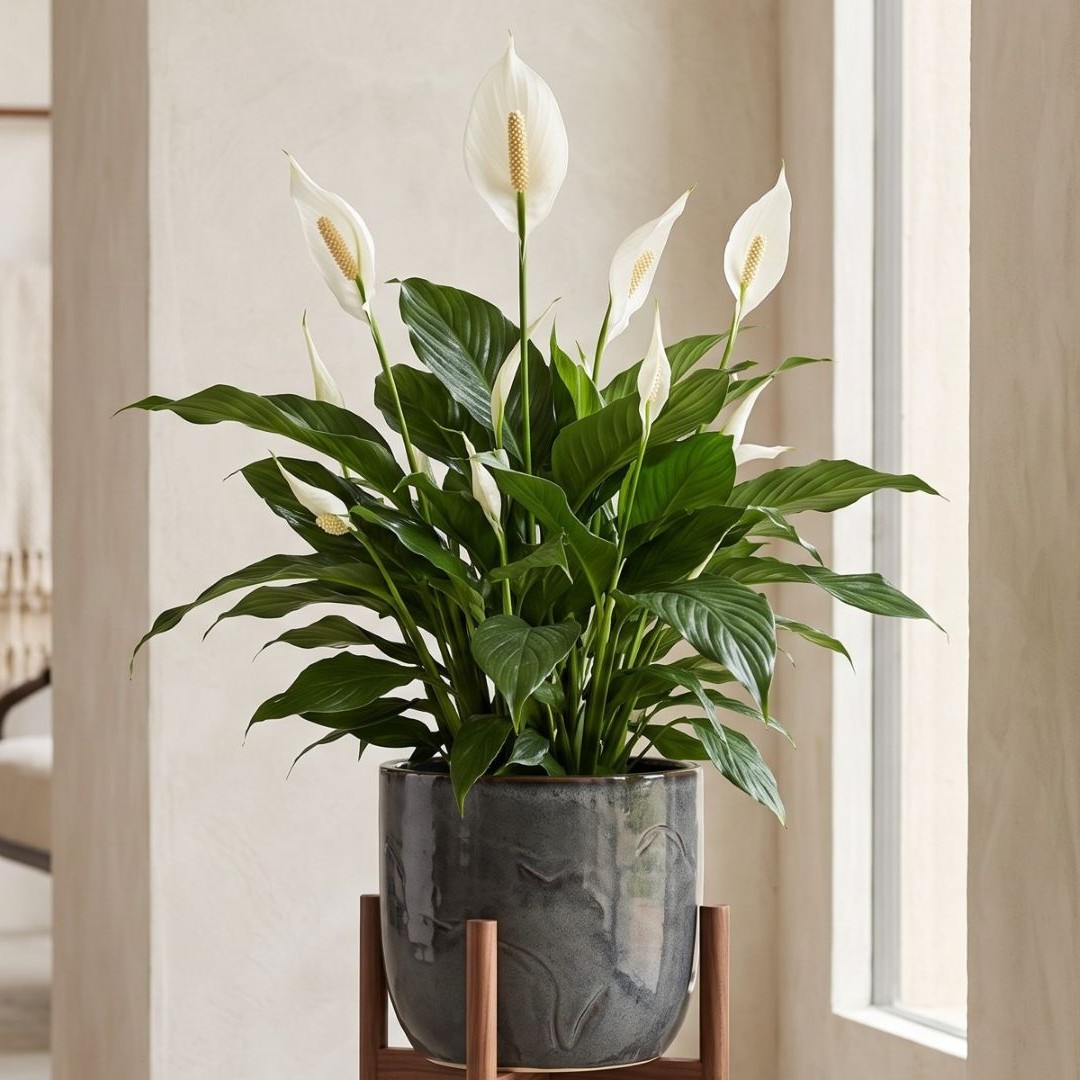
Peace Lily Overview
The Peace Lily has shiny, pointed leaves, which bend outward from the center, creating a dense, bright green top. What appears to be a striking white flower is actually a specialized leaf bract, known as a spathe, which forms a hood over the central, spike-like spadix. These spathes typically emerge in the spring and can last for several weeks, gradually turning green as they age.
Its clumping growth habit ensures the plant remains bushy and full, making it a substantial floor or tabletop specimen.
Key Features of Spathiphyllum wallisii
| Feature | Details |
|---|---|
| Botanical Name | Spathiphyllum wallisii |
| Common Name | Peace Lily, White Sails, Spathe Flower |
| Plant Type | Tropical evergreen perennial (aroid) |
| Mature Size | 1 to 3 feet tall and wide (indoors) |
| Growth Habit | Clumping, upright to arching |
| Growth Rate | Moderate |
| Leaf Appearance | Dark green, glossy, deeply veined, lanceolate |
| Toxicity | Toxic to humans and pets if ingested |
CARE GUIDE
Peace lilies tell you what they need. Their leaves drop down when they need water. This makes it easy for you to know when to water them. They are strong plants. However, they grow best when you copy their natural tropical conditions.

Light Requirement & Placement
They grow best in bright, indirect light. While they can tolerate lower light conditions, they are unlikely to produce their signature white spathes without adequate brightness. Keep them out of direct sunlight, which will quickly scorch and bleach the leaves.

Water & Humidity
Keep the soil consistently moist but never soggy. Water thoroughly when the top inch of soil feels dry. Because they originate in rainforests, they appreciate high humidity; placing them on a pebble tray or in a naturally humid room like a bathroom can prevent brown, crispy leaf tips.

Temperature
Maintain indoor temperatures between 65°F and 85°F (18°C – 29°C). They are sensitive to cold drafts and should be kept away from AC vents and uninsulated winter windows.

Soil & Nutrition
Use a well-draining, potting mix rich in organic matter.
Styling With Spathiphyllum wallisii
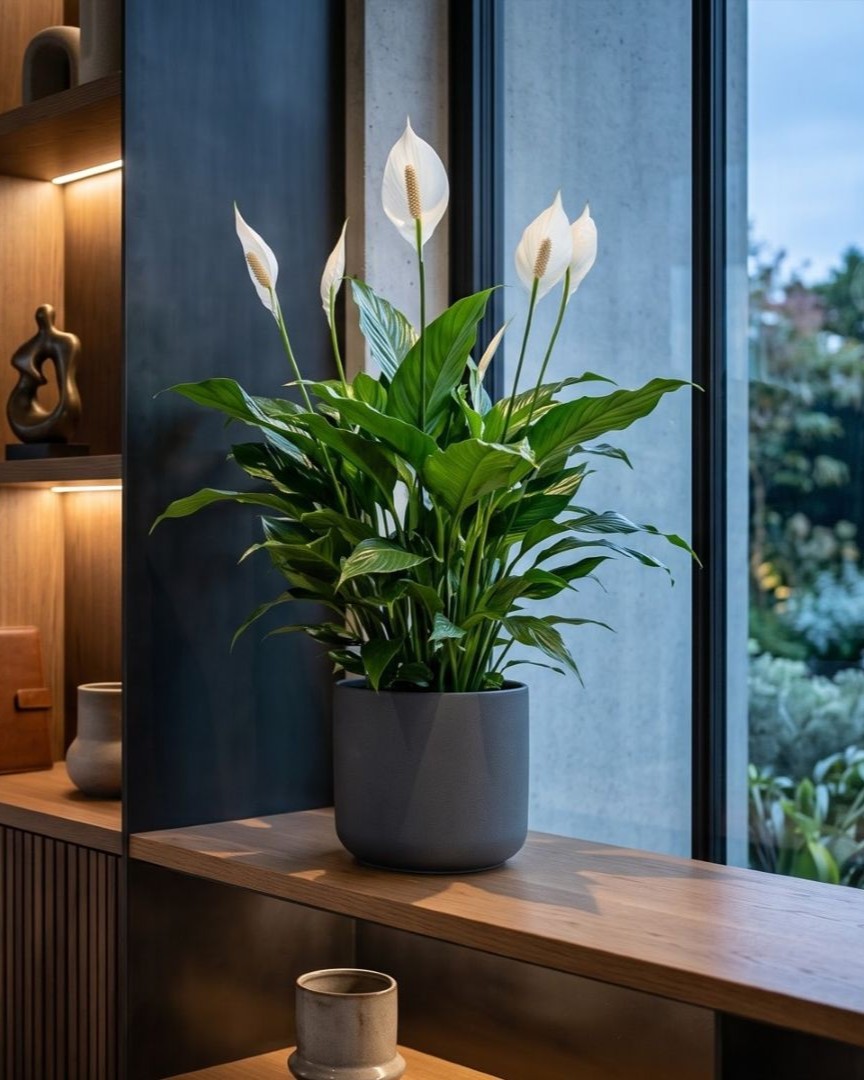
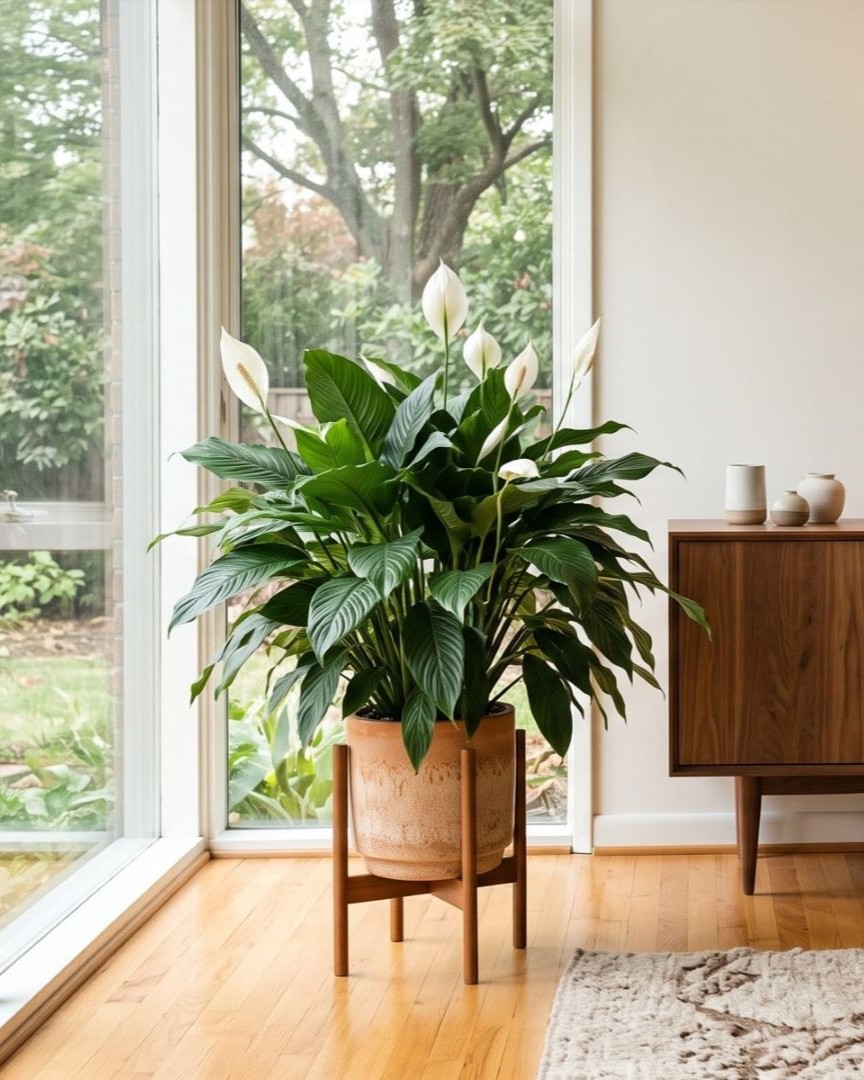
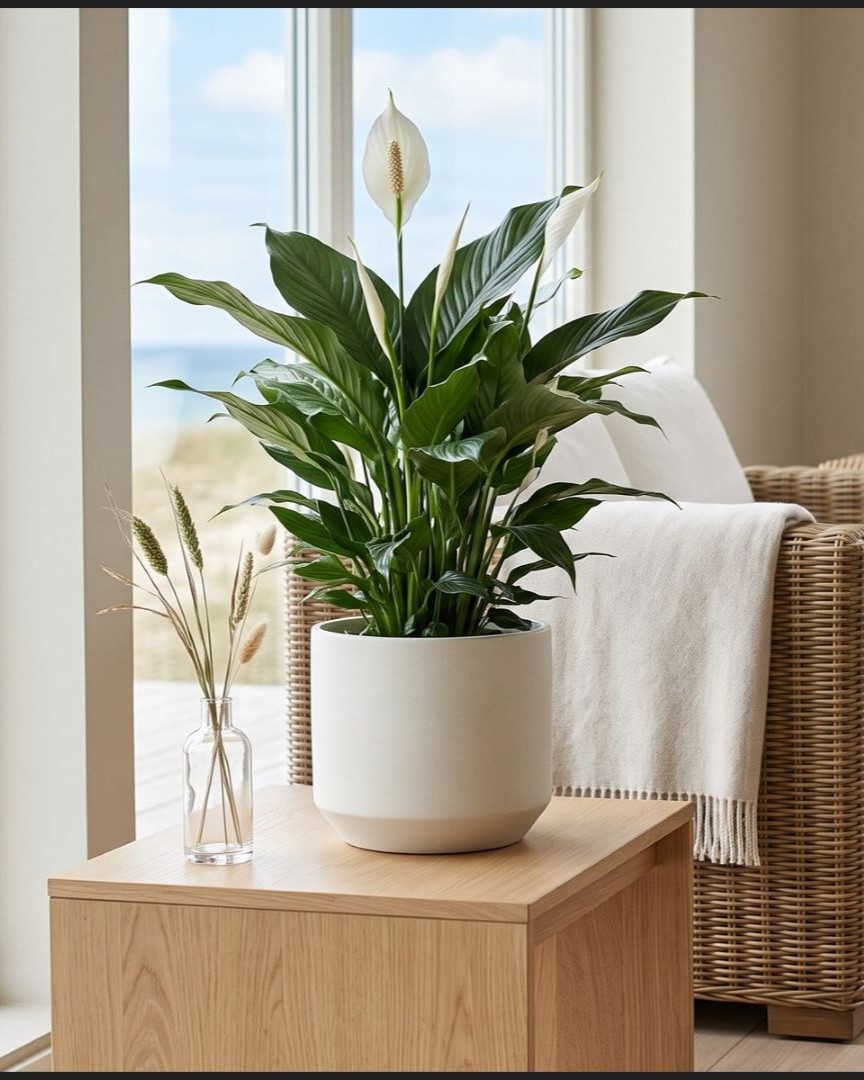
Troubleshooting Common Issues
No Flowers: The plant is likely not receiving enough light. Move it to a brighter spot with indirect sunlight
Brown, Crispy Leaf Tips: Usually caused by a lack of humidity, inconsistent watering, or a sensitivity to the fluoride and chlorine in tap water. Try switching to filtered or distilled water.
Dramatic Drooping: The most common sign of severe underwatering. A thorough soaking will usually have the plant standing upright again within a few hours. If the soil is wet and it is drooping, it indicates root rot from overwatering.
Yellowing Leaves: If the oldest, lowest leaves are yellowing, it is natural aging. If widespread, it is often a sign of overwatering or poor soil drainage