Beaucarnea recurvata (Ponytail Palm) Plant Features and Care Guide
Beaucarnea recurvata, commonly known as the Ponytail Palm, is a highly striking, evergreen, and drought-tolerant succulent, making it very popular as a houseplant.
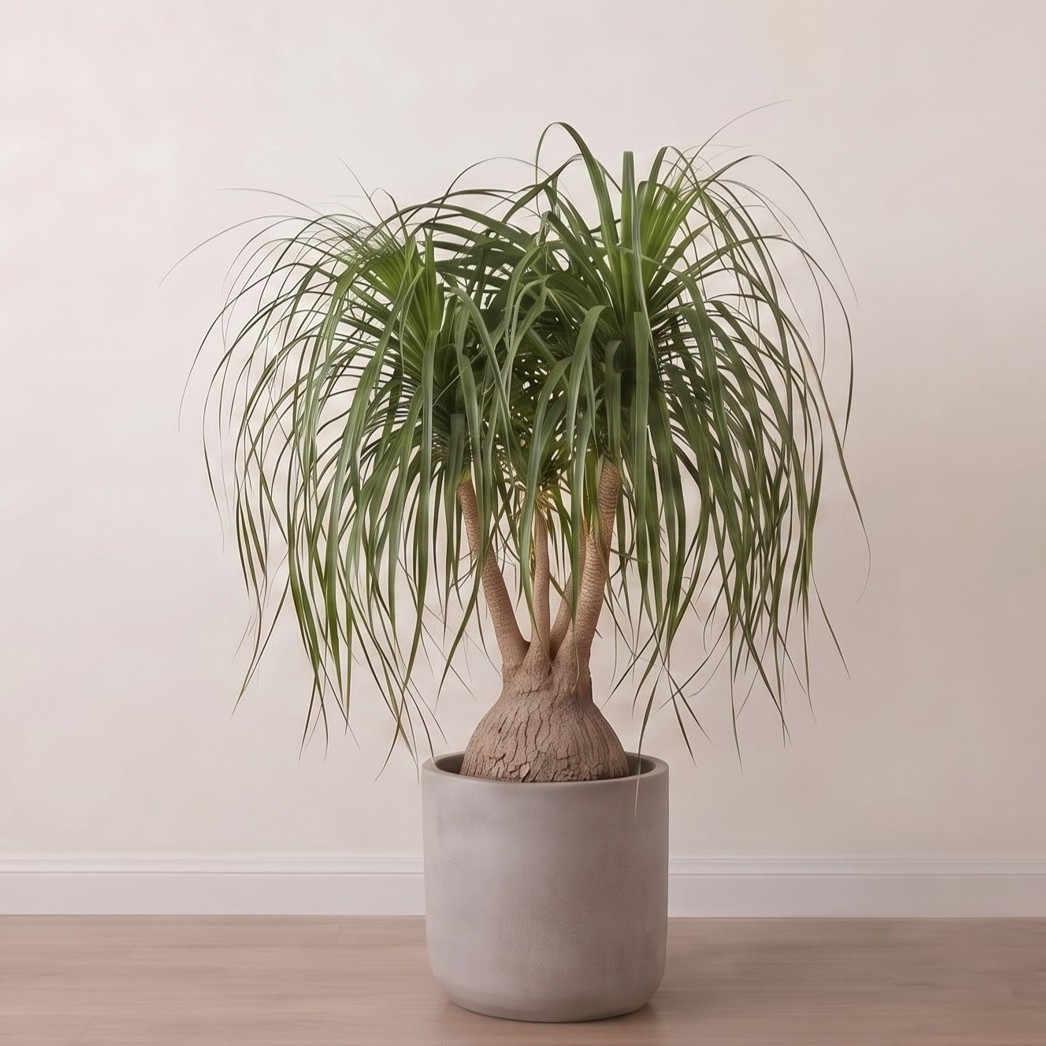
Ponytail Palm Overview
Despite its common name, Beaucarnea recurvata—widely known as the Ponytail Palm—is not a true palm at all. Native to the semi-desert regions of eastern Mexico, it is actually a succulent belonging to the Asparagaceae family. The plant is celebrated for its distinctive, bulbous trunk (called a caudex) which acts as a reservoir for storing water, allowing it to survive prolonged droughts in its natural habitat.
Emerging from the top of this textured, woody trunk is a dense rosette of long, leathery, cascading leaves that curl downward, resembling a ponytail. As a houseplant, it is highly prized for its sculptural, architectural form and its incredibly forgiving nature, making it a centerpiece that requires minimal intervention.
Key Features of Ponytail Palm
| Feature | Details |
|---|---|
| Botanical Name | Beaucarnea recurvata |
| Common Names | Ponytail Palm, Elephant’s Foot |
| Plant Type | Broadleaf evergreen succulent |
| Mature Size | 2–6 feet tall indoors (up to 30 feet outdoors) |
| Growth Habit | Upright trunk with a cascading rosette apex |
| Growth Rate | Slow |
| Leaf Appearance | Long, thin, curling, leathery, dark green |
| Toxicity | Non-toxic to pets |
Care Guide
The Ponytail Palm thrives on benign neglect. Because its enlarged trunk acts as a massive water reserve, it is exceptionally drought-tolerant and resilient. The fastest way to harm this plant is through over-attention, particularly overwatering.

Light Requirement & Placement
Beaucarnea recurvata loves bright, indirect light and can easily tolerate full sun. Place it near a south-facing or west-facing window for optimal growth. While it can adapt to medium light conditions, its already slow growth rate will stall, and the foliage may become sparse and pale.

Water & Humidity
Allow the soil to dry out completely between waterings. In the spring and summer, water thoroughly once every two to three weeks, ensuring excess water drains away completely. In the winter, reduce watering to once every four to six weeks. It tolerates standard household humidity (30–40%) perfectly well and does not require misting.

Temperature
This plant prefers warm temperatures ranging from 60°F to 85°F (15°C to 29°C). Keep it away from cold drafts, air conditioning vents, and uninsulated windows in the winter. It cannot tolerate freezing temperatures.

Soil & Nutrition
Use a fast-draining potting medium. A commercial cactus or succulent mix blended with perlite or coarse sand is ideal. Because it grows slowly, it requires very little feeding. Apply a liquid succulent fertilizer at half-strength just once or twice during the active growing season (spring and summer).
Styling With Ponytail Palm
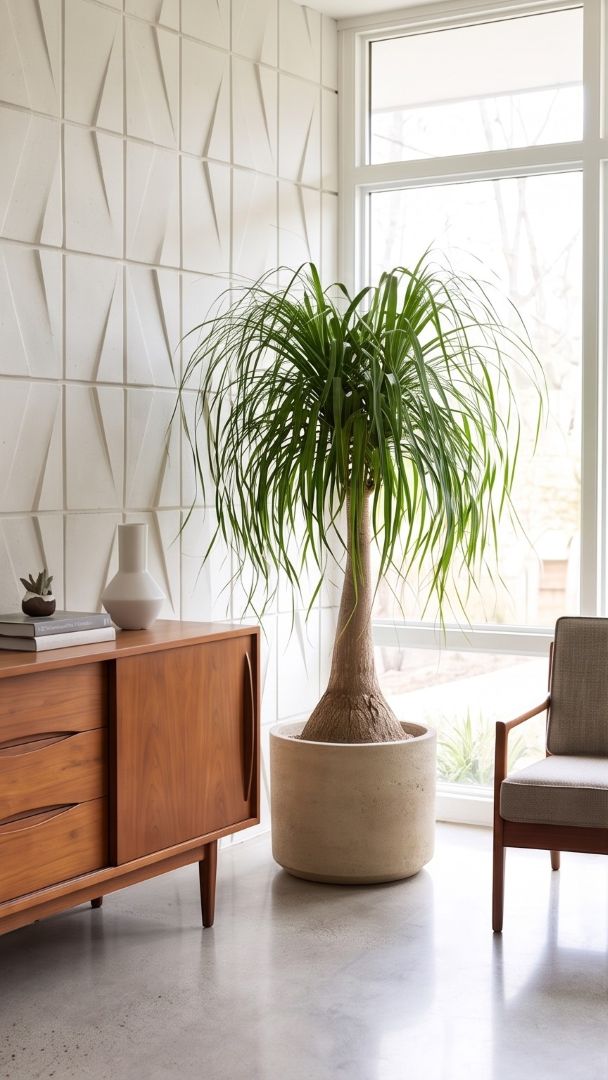
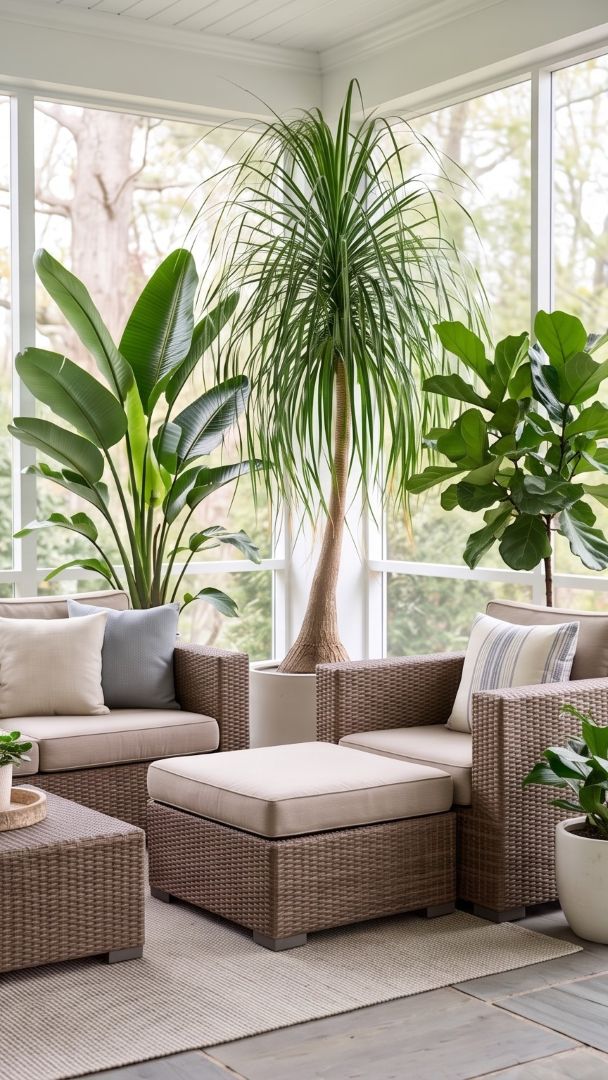
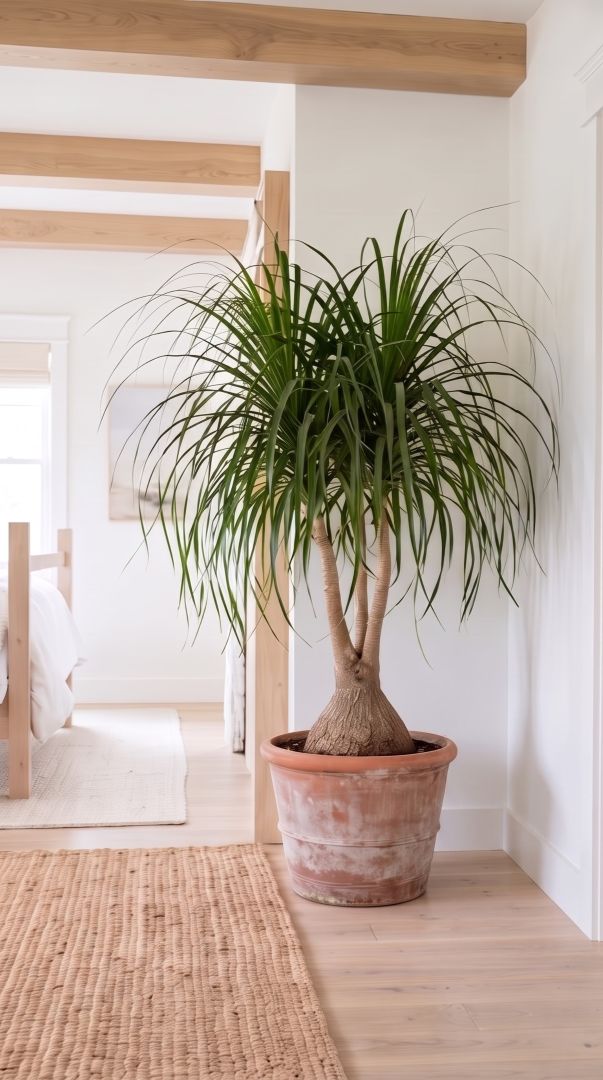
Troubleshooting Common Issues with Your Ponytail Palm
Squishy or Mushy Trunk: This is the most serious issue and a classic sign of root rot caused by overwatering or poor drainage. Stop watering immediately, check the roots, and repot into dry, sandy soil if the rot hasn’t consumed the entire base.
Brown, Crispy Leaf Tips: Usually a sign of underwatering or prolonged exposure to very dry air. However, occasional brown tips on the oldest (lowest) leaves are a normal part of the plant’s natural shedding process. Snip the brown tips off with sterilized scissors to maintain aesthetics.
Yellowing Foliage: If new growth is turning yellow, the plant is likely receiving too much water or not enough light.